Rather than
a reflection of life and loss and the world surrounding his Iowa horse farm
on the idyllic banks of the Mississippi, "Mutiny," and others of its ilk
such as "Old Devils," find Whitmore's focus turned outward, to the state of
the country and the missteps of the government.
"Look at the guys who are screwing us right now compared to the guys who
were in power screwing people 2,000 years ago in ancient Europe," Whitmore
says emphatically. "That song applies to kings o... (more)
Rather than
a reflection of life and loss and the world surrounding his Iowa horse farm
on the idyllic banks of the Mississippi, "Mutiny," and others of its ilk
such as "Old Devils," find Whitmore's focus turned outward, to the state of
the country and the missteps of the government.
"Look at the guys who are screwing us right now compared to the guys who
were in power screwing people 2,000 years ago in ancient Europe," Whitmore
says emphatically. "That song applies to kings of old and President Bush.
It's about how the people can become the servants of the government when
the government should be the servants of the people. I say the monsters in
power can bomb people, but they can't make something beautiful. So, I'm
turning it around, counteracting their evil with beauty and art."
While songs such as these seem ferociously topical in today's political
climate, the rare virtue of William Elliott Whitmore's songs is that they
could have just as easily been sung in the desperation of a Hooverville
during the Depression or in an uplifting choir of a 19th century rural
congregation or marching on Washington in the 1960s. His timelessness and
universality is both an allusive gift and a testament to his craft, and
keeps Animals In The Dark from becoming an overtly political record. For
all the ire in a number of the songs, there are stirring complements such
as the modern hymn "There's Hope For You" and the achingly beautiful "Who
Stole The Soul." It is Whitmore's ability to balance contrasts --
suffering and humor, truth and fancy, the literary and the earthy -- that
make his releases so human.
Whitmore's appeal cuts a wide swath through the modern musical landscape.
Rooted firmly in the Americana sound that he loves so well, Will plays the
kind of music - raw and seemingly untouched by pop culture - that has drawn
young dissidents to folk music since before Dylan's time. Like a young
Billy Bragg, or better yet, like his self-proclaimed hero Shane MacGowan of
the Pogues, Will's innate populism and unaffected sincerity resonate with
the alienated and imaginative youth culture that surrounds punk, a scene
that has embraced him. Honing his skills playing with Against Me,
Converge, the Street Dogs, his beloved Pogues and Lucero among others, Will
has the ability to quiet a rowdy crowd with just a banjo, a true testament
to his voice and vision.
 Whitmore was weaned on music by his musical parents - his father played
guitar, mother the accordion. Young William dived unquenchably into their
rich collection of "good hillbilly music," keenly studying vocal nuances
perfected by Ray Charles, Hank Williams and George Jones. When his father
handed him a $10 Sears and Roebuck guitar, Whitmore summoned Williams'
rebel blueprint "Lovesick Blues" for instruction. "I still can barely play
guitar or banjo," he says with a modest laugh.
Â
Two unlikely crooners leveled an even more profound impact. "I always loved
velvety singers like Dean Martin and Frank Sinatra," the 30-year-old
admits. "Man, I used to try hard to sing like that but soon realized that I
couldn't. I used to smoke a lot and abused my throat. So, I turned my
greatest weakness into my strength." At 20 - when he felt he "could start
to put my fingertip on that template of old-time music" - Whitmore started
writing songs and developing his signature country-blues moan.
Â
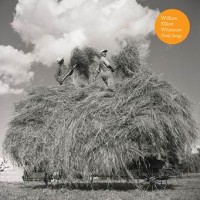
His craft blossomed accordingly. Born and raised and still residing on a
farm in Lee County, Iowa, Whitmore literally cultivates his song cycles
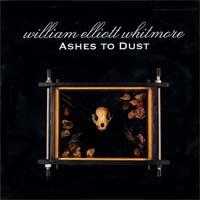
from earth. In fact, he wholly envisioned the modern pastorals Song of the
Blackbird (2006), Ashes to Dust (2005), Hymn for the Hopeless (2003) and
Calendar Club of Danger and Fun (2002) while working his land. Whitmore's
writing, in other words, links art and sustenance into an unbroken circle.
Â
"I still live on the farm where I was born, still have horses and
chickens," Whitmore says. "I write mostly when I'm out doing my chores - I
love the land and love the simplicity. I don't even have a bathroom; I have
an outhouse. I love to plant seeds in the spring and harvest in the fall
and cut firewood in the winter. I draw a lot from relating the cycles of
harvesting to those of birth and death."
The land is omnipresent in all of Whitmore's work, inescapable by Will as a
writer and by the listener imbibing the heady brews he serves. Yet the
ethereal notions of grace and justice seem to weave a chain that encircles
Animals in the Dark, highlighting the maturation and growth of an exemplary
artist.Whitmore showcases his classic songwriting and expressive playing of
the acoustic guitar and banjo, but adds elements such as strings, an organ
and a pedal steel, putting the songs into full arrangements and a band
context for the first time. The results are a more expansive, cultivated
sound, without losing any of the palpable soul that has garnered the 30
year old such critical acclaim.
"It's autobiographical, but also looking at the state of the world,"
Whitmore explains. "I was never good at writing protest songs like Bob
Dylan or Michael Franti or Ben Harper. I was thinking about man trying to
control other man, whether it's governments bombing another country because
they want their oil or fighting for water supply. It's me being fed up with
a lot of things."
For us, it's a poignant tome from one of today's best musical storytellers.
Source: Anti-