Punknews.orgPunknews.org Logo
Review Navigator

BackForward

Features


Contests


Reviews


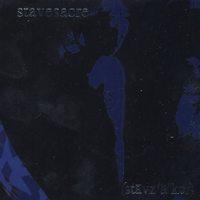
Stavesacre

(stavz'a'ker)
2002
Nitro

Stavesacre - (stavz'a'ker) (Cover Artwork)


Review by: Aquaman5K
See others by this writer

Download Track 01 here (link)

Only registered users
can post comments


Print this Review Send this Review to a Friend
Nitro Records (Logo)

Published on November 29th 2002

I really wanted to like this record when I first listened to it. I have all of Stavesacre's albums, and they're one of my favorite bands. However, it took a few listens for this one to grab me. But enough about me and more about the band.

This is Stavesacre's first album since leaving Tooth And Nail for Nitro Records, and it mostly follows in the footsteps of their last record, speakeasy. I don't think it works quite as well as an album, but it does contain a few very good songs. Mark Solomon's Vocals are as always a highlight, and the occasional use of strings brings the intensity of the album up a notch. If you are at all a fan of the band, this record is a must. If you've never heard Stavesacre before, you may as well start here as this features some of their finest songs.

In the end, this is a solid album that will likely appeal to fans of Tool and AFI.

1. Witch Trial - 5/5 Awesome song, a really great choice to lead off the album.

2. Blind Hope - 4/5 A good solid song

3. Alice Wishlist - 4/5 I didn't like this one at first, but now it's growing on me.

4. Island - 5/5 Another gem, the backing vocals are simply excellent.

5. A Place Where I can breathe - 5/5 More rock!

6. If Not Now - 3/5 An alright song, but it didn't really grab me

7. Night Town - 2/5 Not quite up to par, reminds me too much of Sundown Motel from Speakeasy

8. The Sad Parade - 4/5 I dig this song.

9. Why Good People Suffer - 5/5 Here's the rock! Stavesacre shows a little hardcore edge in this track, and I have to say I like it.

10. Yes - 1/5 Hands down my least favorite track, it drags on for 5:26 and goes nowhere. I know Stavesacre was trying to write a little more "mellow" song here, but it simply falls flat in this case.

11. World to Wait - 4/5 A decent closer, but not quite perfect.


Please login or register to post comments.
What are the benefits of having a Punknews.org account?
  • Share your opinion by posting comments on the stories that interest you
  • Rate music and bands and help shape the weekly top ten
  • Let Punknews.org use your ratings to help you find bands and albums you might like
  • Customize features on the site to get the news the way you want.

    Posted by Anonymous on Wednesday, January 7, 2004 at 3:50 PM (EST)
    My Score:

    bump for the sheer stupidity of this argument.

    Posted by Anonymous on Monday, December 9, 2002 at 5:12 PM (EST)
    My Score:

    Parting comments from my friend:

    I want YOU to know that I have overlooked YOUR personal attacks (I don't do well to people playing martyrs when they are the ones who started and had the most personal attacks). I could go through and list them if you want me to. I'll quote one for you, "you people are blind..."

    Your questions have been answered in the time that was allowed. If you have others, please research them, but don't cross your arms and have this attitude of, "I'm taking my ball and going home." You asked simple questions and received answers that fulfilled them. I gave you plenty of resources: books, names of people, context, etc. What you do with them is now your choice. My guess is you won't do anything with them that involves studying. I pray that you do.

    Thank you.

    -JD0e-

    Posted by Anonymous on Monday, December 9, 2002 at 1:27 PM (EST)
    My Score:

    I appreciate your response. All of the extensive responses were written by a friend of mine (due to finals week), I apologize if any of his responses were found insulting, as that was never my intention. I enjoyed reading the debate, and encourage you to keep studying, as I will do as well. I think we can agree to disagree. This is an intense subject, and I hope there are no hard feelings.
    -JD0e-

    Posted by waste_elite on 2002-12-08 21:25:48
    My Score:

    -JD0e-, apparently you have a skewed view of a "suitable" response. suitable to me is something that answers the questions directly instead of talking your way around them. i've read everything you've posted and i've yet to see anything that is truly convincing or substantial.

    i will ignore your personal attacks on me as i feel no need to "prove" my intelligence to you.

    Posted by Anonymous on Friday, December 6, 2002 at 3:33 PM (EST)
    My Score:

    Worship what you want. But it shouldn't affect me. And when it does, don't be surprised when I lash out against your "religious values".

    Posted by Anonymous on Friday, December 6, 2002 at 3:32 PM (EST)
    My Score:

    Poop on a plate....religion is poop on a plate.

    Posted by maverick on 2002-12-06 12:37:39
    My Score:

    Just as a heads up to all of you - this review will be bumped off the page around roughly 3PM [CST], so get your final comments in now and bookmark it so you can come back later, or just start going to the Reviews Archive.

    -Scott

    Posted by Anonymous on Friday, December 6, 2002 at 1:48 AM (EST)
    My Score:

    Holy fucken shit...What are you guys gonna do when this review isn't on the new reviews bar anymore?

    Posted by Anonymous on Thursday, December 5, 2002 at 11:52 PM (EST)
    My Score:

    The latest response, from my friend:

    If a single sentence is flexible in regard to its context, then why are
    other solitary passages given so much import?

    Because people feel they exclaim single truths (which some do), but they are best seen and understood in their original contexts.

    For example the line 'in the
    name of the Father, and the Son, and the Holy Ghost' appears only once in
    the entire Bible, (Matthew 28:19) and yet it is at the center of one of the
    great concepts of Christianity, the Trinity (Which, by the way, weakens
    Christian claims to monotheism, in the eyes of Jews and Muslims).

    There are many other proof texts for the Trinity. If you would like some of them, I can give them to you. Christians are not worried about what other people think. I do not care what you think about me or my beliefs. I am answering you because you have asked. We do not care what the Jews and Muslims think of our theology. The fact of the matter is that God is the most complex and deep Being alive. To understand even part of the Trinity is to scratch the surface of His depth.

    There shouldn't even be an APPEARANCE of contradiction.

    Says who, you? I would be less likely to believe it if it were all simple and prim-proper.

    i don't care whether
    there were not "verses and references" when the bible was written, that
    really is irrelevant.

    Then you have no idea about how Jews in that time thought about the Bible. What you want to do is just simply apply the Bible to now without looking at it in its original context. If you do it that way, you will never find the true meaning.

    also, about the supposed "inferiority" of the KJV. god said his word would
    be preserved and that he is not the author of confusion. if that is is the
    case, there would be no innacurate translations and there would be no
    confusion here.

    Study the origin of the cannon and the different manuscript families. Have you studied textual criticism? I have, at length, and if you are not willing to listen to the history behind the 4 textual families (which is where we get the translations from today), then you have proven your lack of interest and your only purpose to instigate a meaningless debate.

    the KJV is the most accurate and favored translation among the majority of
    fundamentalists and literalists.

    You haven't been searching very well then. The New American Standard Version is the most accurate. So is the NRSV and NIV. Even a Biblical scholar from Princeton or Harvard will tell you that. If the KJV is the best, then why is it that hardly any seminary in the world uses it as the main translation they teach from? Why is it that even no Jewish seminaries teach from the KJV Old Testament. ANSWER: Because it is the worst translation around.

    this is the first time i've ever heard it
    called the least accurate translation. interesting. also, the majority of
    these contradictions are not in any way exclusive to the KJV.

    They are cleared up with more accurate translations and reading the original language, or reading a commentary to see what it says in the original language.

    the majority of these contradictions are in no way sufficiently defeated. if
    you twist and contort the bible and what it "really means" enough, you could
    make it say anything you really want. and that is what i see being done.

    How do you see that in Protestant and Evangelical Christianity? By studying the original languages of Hebrew, Aramaic, and Greek? By researching the literary and historical contexts of the book and time? By trying to see the author's original meaning? I see you doing what you have just criticized.

    all i have to say is there are plenty more that i have posted down below and
    i am waiting for you and your friends to make attempts at derailing them. i
    feel like my intelligence has been insulted here, yet i have not been in any
    way convinced by your arguments (many of which have not even been answered,
    specifically the "fatal flaw" i posted).

    So far, in your arguments, you have not proven your intelligence. Suitable answers have been given, but I do not have the time to go into 15 page essays on each question. You ask a simple question, you get a simple answer.

    you people are blind. it is so absurd, the more i actually contemplate the
    concept of christianity the more dumbfounded i am by the fact that people
    actually believe this stuff.

    1 Cor. 2:14

    the blind have been blessed with security...

    Are you speaking of yourself. You seem to be the blind, who are secure in the fact that you are right and we are wrong, or are you getting so defensive becausee you are starting to question yourself?

    more to come...

    Looking forward to it.

    -JD0e-

    Posted by Anonymous on Thursday, December 5, 2002 at 11:50 PM (EST)
    My Score:

    "There shouldn't even be an APPEARANCE of contradiction" Religion is based on faith, and if everything made perfect sense and everyone agreed with it, there would be no test of faith

    Posted by Anonymous on Thursday, December 5, 2002 at 9:51 PM (EST)
    My Score:

    JD0e:
    Nice job posting a what looks like a whole book.

    Waste Elite:
    you might try reading The Encyclopedia Of Bible Difficulties by Gleason Archer. It points out what appears to be contradictions and explains what it really means based on the times and the exact translation and how different greek or hebrew symbols can mean different things when translated. It deals with putting things in context and using the verses that come before and after, not just a tiny part of one verse like you use.
    Or if you have time, say years, you could read the Keil and Delitzsch Commentary on the Old Testament. It's 10 volumes and will take you a very long time to read. But it is one of the definitive commentaries.

    later days y'all.
    -boba fett

    Posted by Anonymous on Thursday, December 5, 2002 at 6:48 PM (EST)
    My Score:

    Fuck religion, if god was real I'd cut him up with a knife....fucker would be an asshjole. But since no one knows IF god exists or not, I think it's time to qut reading your brainwashed bible books.

    Posted by Anonymous on Thursday, December 5, 2002 at 5:07 PM (EST)
    My Score:

    Intro
    there are some parts of the Bible that are miraculous and cannot be explained. That is where faith arrives to the argument. Most of the questions are ones that can be answered, but there are a few that he will not find an answer for. It is those questions that he will rest his case on to prove the Bible's inaccuracy. However, we know that God is miraculous, and the only perfect being. Therefore, I have no problem in believing in the creation of the universe, the virgin birth, the resurrection of Jesus, God making the sun stand still for a day, the parting of the Red Sea and the Israelites walking through it on DRY ground, etc. One who does not have faith cannot understand our love and belief in God (1 Cor. 2:14).

    Also, it is a laughing stock to quote Webster's dictionary to prove an argument (see "Firmament" argument).

    research the manners, customs, and times of the days that parallel with verses he is ripping out of context.

    Response
    In Genesis are two contradictory stories of creation. In Genesis 1:20 & 21,
    "every living creature" is brought forth from the waters, including every
    winged fowl." But in 2:19 God brings forth "every beast of the field and
    every fowl of the air" from dry ground.
    In Genesis 1:2, earth comes into existence on the first day, completely
    underwater. Only by the 3rd day were waters of the deep collected, and dry
    land formed. But in Genesis 2:4, 5, & 6, earth on the first day was dry
    land, unwatered.
    The first story has trees made on the 3rd day and man formed 3 days later
    (1:12-13 and 26-31). In the second version man was made before trees (2:7,
    9). If chapter 1 is true, then fowls were created before man. If chapter 2
    is true, then they were created after man.
    Version one teaches man was created after all beasts. The second is clear,
    Adam was created before beasts. (1:25,27 versus 2:7,19).
    In version one, man and woman are created simultaneously (1:27) while in
    version two (2:7,20-22), man and woman are separate acts of creation.

    Even the most liberal Bible scholars will agree that Genesis 2 is a recaption of Genesis 1. Also, there are no days listed in Genesis 2. Gen. 2 is merely a commentary on Genesis 1.

    In Genesis, the long discredited description of the heavens as a "firmament"
    is a fundamental contradiction in the Bible of the known realities of
    astronomy today. Biblical stars, sun and moon are all embedded "in" this
    firmament. (The meaning, during biblical times, of the word "firmament," was
    a "solid" body or orb, or the solid concentric domes holding the heavenly
    bodies ~ Webster's Third International Dictionary.) We are told there are
    waters below the firmament, and told waters are "above" it, too (1:7).
    Really!!

    Number one, never prove a point about the original Hebrew language by quoting "Webster's Dictionary." No scholar in their right mind uses that as a proof for their point. If you want to know the meaning of words, look up words in books like: The Dictionary of New Testament Theology; The Exegetical Dictionary of the Old Testament; The Theological Dictionary of the New and Old Testament; etc. "Water" in Hebrew is "ha-myim" and "sky" is "ha-shymiym." In Hebrew, they are closely related and "sky" is from the word "water." "Firmament" is "raqia" in Hebrew. It is translated "expanse, literally to hammer out." It speaks of God's creative force in "spreading out the earth." Now, all that to say that I believe in a canopy theory. Meaning that there was water below the "raqia" and above the "raqia." That is why it is important to see that the word "sky" comes from "water." There was a greenhouse effect on the earth. There is actually proof from many scientests that there may be planets (and probably have been planets) that have had this greenhouse effect.

    Babylonian Astronomers envisaged earth as a hollow mountain surrounded by a
    vast sea. Inside the earth lay the dark, dusty realm of the dead. Arching
    over earth is the "circle of the earth" (Isa. 40:22) or the solid firmament
    (Greek: solid body; firm foundation) on which moved sun, moon, planets and
    stars, somehow. Held above the firmament was water (for rain, to come
    through "windows"), and the firmament domes were supported by a ring of
    raised earth set in the midst of the sea. [In later times, astronomy saw the
    addition of more firmaments to better account for the separate motions of
    the moon, sun and planets. The firmaments were seen as complex rotating
    solid concentric domes, one within another.]

    So? See above see the previous answer. Your point doesn't prove anything.

    Why was the firmament formed in the "midst" of earth's "waters"(1:6)?
    Clearly, this is an image of a dome-like firmament over flat waters of a
    flat earth. Had earth commonly been known to be round then, the writers
    wouldn't need to have God set the domes in the sea, a notion likely
    conceived to keep seas from draining off over the "edges" or "ends" of the
    earth.

    No, the the Bible does not say that the earth is flat. See the previous answer.

    The Bible's scribes exactly copied the ignorant inventions of Babylonian
    firmament astronomy of that time, including its words and concepts of
    windows and doors in the firmament for rain!

    Perhaps the Babylonians got their traditions from a religion older than theirs: Patriarchal Judaism. Perhaps that is why they seem to similar. There is adequate proof that Judaism's roots are the oldest religious roots of the world.

    "Above the firmament" (Gen. 1:7) is where the huge supply of water needed
    for the Flood was stored -- more than all earth's clouds could ever provide.
    As we read in the account of the Flood, God ended the rains using Babylonian
    astronomy again (Gen. 8:2): "the WINDOWS of heaven were stopped and the
    rain...restrained." (My emphasis)

    The water canopy crashed down on the earth, and God opened the waters of the deep.

    Did God speak thus, to be understood and not confuse or mentally upset those
    living then? Could it really upset people then to deal with truthful
    astronomy -- the same people who were ready to believe in a virgin birth or
    a that a woman could be born from a man's rib-bone?

    It might surprise you to know that many astronomers have become Christian over the past years, and may scientests say that they believe in the God of the Bible because of the complexity of the universe. It would do you well to read some Christian scientests view of creationism. Let me recommend some:

    Francis Beckwith (Ph.D., M.A. in Philosophy, Fordham University; M.J.S., Washington University School of Law, St. Louis)

    John Bloom (Ph.D., M.S., in Physics, Cornell University; Ph.D., M.A. in Near Eastern Studies, Annenberg Research Institute; M.A., M.Div., Biblical Theological Seminary)

    Paul Chien (Ph.D. in Biology, University of California, Irvine)

    William Lane Craig (D.Theol. in New Testament, Ludwig-Maximilliens-Universitat Munchen; Ph.D. in Philosophy, University of Birmingham, England; M.A., M.A., in Philosophy, Trinity Evangelical Divinity School)

    William Dembski (Ph.D. in Mathematics, University of Chicago; Ph.D. in Philosophy, University of Illinois; M.Div., Princeton Theological Seminary)

    Stephen C. Meyer (Ph.D., M.A., in History and Philosophy of Science, Cambridge University, England)

    J.P. Moreland (Ph.D. in Philosophy, University of Southern California; M.A. in Philosophy, Univeristy of California, Riverside; Th.M. in Theology; Dallas Theological Seminary)

    Henry Morris (Ph.D., M.S. in Science, University of Minnesota)

    John Mark Reynolds (Ph.D., M.A., University of Rochester)

    Hugh Ross (Ph.D., M.S. in Astronomy, University of Toronto, Canada)

    (NOTE: Christian scholar Saint Augustine [354-430 A.D.] and Father
    Lactantius, etc., continued the traditional denial of the earth's roundness,
    claiming rain would "fall upward" in places and that even if upside-down
    people could live on a globe's bottom, then they couldn't see the Savior's
    return in glory.)

    There have been many mis-guided Christians who did not know how to interpret the Bible. Just as there are many mis-guided scientests and philosophers today. Are we talking about what the Bible says or what others say? I prefer to read the Bible.

    Two contrary Genesis versions suggests at least two writers, both ignorant
    or unmindful of each other, and ignorant of the facts of nature and
    astronomy, not to mention the age of the earth.

    Is the age of the earth important in the greater scheme of life? I don't stay up at nights wondering about it. Do you? Also, there is great debate about the word "day" among Christian and secular scholars as to whether the word day means one 24 hour period or many years.

    Let any secular writer pen a book with so many contradictions (more of which
    will follow), on science, geology, morals or anything, and the world would
    plunge, as a vulture on carrion, to heap monumental scorn over the work.
    As "history," the Bible is unique. In First Kings 16:6,8 the king of Israel,
    Baasha, dies, replaced by his son Elah during the 26th year of Asa's (King
    of Judah) reign. But in Second Chronicles l6:1 we read that Baasha, king of
    Israel, goes against Judah during Asa's 36th year.

    1 Kings is talking about the kings of Israel and 2 Chronicles is speaking of the kings of Judah. Each of these kingdoms had different calenders that they worked from. They are saying the same date, but from two different calenders.That is why it is hard to pinpoint the date of the book of Daniel, because you have Daniel serving Nebuchadnezzar (Babylon), Darius (Mede-Persian), and Cyrus. All of them had different dates for the same periods. This is not an error of the Bible, but rather the complexity of caleders. Others who had a different calender were the: Assyrians, Babylonians, Medes and Persians, Greeks, Romans, etc. Read the Historical context!

    In Genesis 9:3: "Every moving thing that liveth shall be meat" for Noah. But
    Deuteronomy (14:7-21) later gives a list of animals, birds and fish that
    must not be eaten.

    Because of the area that they were living in at that time... certain animals, birds, and fish would cause disease. It would be like me trying to eat fish from the dirtiest river in the world... not too healthy for me, ezpecially since they did not always cook the food all the way.

    Circumcision is required (Gen.17:10), and useless (Gal. 5:2).
    Abraham had two sons, Ishmael and Isaac (Gen.16:15 & 21:3) but Isaac was
    Abraham's "only" son? (Gen. 22:2,12 & Heb. 11:17).

    The word for "only" is the word "special." It means that Isaac was his unique son, because it is through Isaac's line that the Jews would come, and Jesus would also come through his line.

    In Exodus 33:20, says God, "Thou canst not see my face; for there shall be
    no man see me and live." God must have been mistaken, or changed: For in
    Genesis 32:30 Jacob sees God "face to face" and lives. The same for Moses,
    Aaron, Nadab, Abihu and 70 elders, who saw God, and ate and drank with him
    (Exodus 24:9-11). But not so, says First John 1:18: "No man hath seen God at
    any time."
    How decide? Well, I agree with John.
    God dwells "in the light which no man can approach" (1 Tim. 6:l6). But this
    is not true, as in First Kings 8:12 it says: "The Lord said that he would
    dwell in the thick darkness."

    Again, read the context. They did not see His face. They were in His presence. There is a big difference. See the answer to a similar question you posed in a previous e-mail.

    Would literalists say I shouldn't be so "literal"? Is the "light" in which
    Jesus dwells "en(light)enment?" Does God remain in thick darkness but keeps
    this "light" of enlightenment?

    Darkness refers to the clouds that surround God to shield people from His glory and fire. See a reference of God coming to the mountain in Ex. 19:16-21).

    But aren't we opening a Pandora's box of endless "interpretation" here?
    Where do we draw the line if we do that?
    When the cry (Josh.10:12-13) "Sun, stand thou still" (and moon too) was
    uttered and carried out, the sun "stood still" in the sky, not setting.
    But of course, as we all now know about astronomy, a 'setting sun' is an
    inaccurate archaic and figurative phrase reflecting only the illusion of a
    moving sun. It's created by the actual motion of a rotating earth around its
    own axis. In the solar system, the sun is, of course, already "still" (while
    the moon isn't). But, I guess God knew what Joshua "meant," and instead of
    quibbling over astronomical facts, He allowed the Bible writings to describe
    it inaccurately (using the primitive terminology of the knowledge of the
    time). So God magically stilled both the earth and moon (and did it without
    cataclysmically throwing our land and continents off into space). But then,
    there's that "interpretation" thing again, because the "word of God"
    definitely does say the sun "stood still" (implying incorrectly that it had
    been in motion) and not that it "appeared" to, or that the "Earth stood
    still." Is the Bible literal or figurative? (See also Eccl. 1:5, about "the
    Sun also riseth...." and Chron 16:30; Psalms 93:1 [Earth is already
    immovable])

    This is a miraculous event. God made a day stand still. This takes faith to believe in. See my introductory comment. Interpretation is a funny thing, and within the Bible there are different genres: History, Law, Poetry, Prophecy, Apocolyptic, Gospel, Letters, etc). Each has a different rule of interpretation. Here are some good books on interpretation:

    D.A. Carson, Exegetical Fallacies
    Robertson McQuilkin, Understanding and Applying the Bible
    Robert Stein, A Basic Guide to Bible Interpretation
    Roy Zuck, Basic Bible Interpretation

    and the best... Biblical Hermeneutics: A Comprehensive Introduction to Interpreting Scripture. Written by: Bruce Corley, Steve Lemke, and Grant Lovejoy.

    Matthew quotes Jesus (19:26), "with God all things are possible." Did
    Matthew or Jesus forget something? In the Book of Judges (1:19) God is not
    almighty, as he helped rid Judah of inhabitants of the mountain, but could
    not drive out those in the valley "because they had chariots of iron."
    This God of miracles apparently can move the largest body in the solar
    system, the Sun (or at least stop planet earth), in order to prolong
    daylight for Joshua's military revenge (or to move the sun's shadow 10
    degrees backward [2 Kings 20:10-11 or Isaiah 38:7- 8]). Yet this same mover
    of heavens is cowed by mere horses & buggies made of iron?

    It was not God's will for them to have that land. If God had wanted them to have it, they would have. Just because it says that "God was with them" does not mean that God gives them all that they want. Also, as a result, Caleb recieved his land, which was a promise of God.

    Exodus 31:I7: Like a man, God rests and can be "refreshed." Isaiah scorns
    such contemptible weakness.
    In 40:28 he insists God, creator of the "ends of the earth, fainteth not,
    neither is weary." An infinite God cannot tire, nor needs to be - nor can be
    -- "refreshed."

    Please look up the original meaning of words before you make assumptions. The word for "rest" did not mean that God was tired as we see the word "rest" today. I think that a word can change over several thousand years. The word in Hebrew means that God merely stopped working on that project. Read the original language.

    Again on astronomy, the spectre of "interpretation" rises, asking us: 'what
    are these "ends" of the earth' quoted above? A spherical planet has no
    "ends." Even a flat plate or the line of a circle is "endless." The phrase
    "ends of the earth" then, was not figurative: We know the common belief then
    was that earth, very literally, did have "ends." Nowhere in the Bible is the
    earth described as "spherical." (See also Rev. 7:1: "...four angels standing
    on the four corners of the earth" & Daniel 4:10-11. Daniel's words here make
    little sense for a spherical earth)

    There are some places in the Bible that are taken to be literal, and some that are metaphorical. Can you tell the difference between metaphors and literal statements? I'm sure that you make metaphorical statements as well. There is a deeper meaning. Again, I must direct you to study the interpretation of Apocolyptic literature.

    GOD does not change. James 1:17 says God has "no variableness..." but then,
    in Jonah 3:10, God "repented" and changed his mind about smiting Nineveh's
    people. So what are we to think of assurances given in Numbers 23:19, which
    states, "God is not a man...neither the son of man, that he should repent."
    Yet this tireless omnipotent God himself volunteers the striking thought in
    Jeremiah 15:6, "I am weary with repenting."
    How human that confession sounds by a presumably unchanging God who 'cannot
    weary' (as Isaiah wrote above), nor repent.

    In Jonah 3:10 the word for "repented" is the word "comapassion." GET A DIFFERENT TRANSLATION!!! He did not change His mind about Nineveh. His impending wrath was resting upon them, and would have devoured them if they had not repented. Nineveh was the one who changed its mind. Check the context, buddy. Also, God is outside of time. That is a huge philosophical statement in and of itself.

    In Deuteronomy 4:24 "God is a consuming fire, but in John 4:1 "God is love."
    He's "the God of Peace" in Romans 15:33 but in Exodus 15:3, "the Lord is a
    man of war." (Called a "man" here? Yet not called a man in Numbers 23:19?)

    God has many sides to Him. One might call me happy, but another may call me mad. Why? Because at one time when one saw me I was happy, and another time I was sad... I am still who I am, but I do have emotions. The same is true with God. Also, the original meaning in Ex. 15 of the word you defined as "man" is actually the word "warrior."

    God is "just and right" (Deut.32:4) yet in a mercenary manner he advises, in
    the dietary restrictions, that what you can't eat as unclean may be given
    "unto the stranger...or thou mayest sell it unto an alien." Gee, has the
    Better Business Bureau heard of this "just and right" commercial behavior?
    (Deut.l4:21)

    Because stangers and aliens were from different areas and use to different foods. It is like us going to Mexico and trying to drink the water. They are use to it, but we are not. This is a similar situation. Also, God is interested in those who believe in Him first.

    God said (Isaiah 45:7) "I make peace and create evil," a contradiction in
    one holy breath!! (And we all thought, of our own evil, it was 'the devil
    made me do it.')

    I answered this in a previous e-mail.

    "Now go and smite Amelek and utterly destroy all that they have, and spare
    them not; but slay both man and woman infant and suckling, ox and sheep,
    camel and ass" (1 Sam. 15:3). That was Samuel's order for Saul originating
    from the Lord. Wrote one Bible commentator, M. J. Gauvin:
    "Slay the old man with trembling hands and silvered hair; murder the mother
    who shields with her body the life of her child; rifle the cradle, and
    plunge the glittering sword of death through the frail form of the smiling
    babe ...and know, ye fiends of ruthless slaughter, ye but fulfil the command
    of the God whose 'mercy endureth forever'!"
    "Love thy neighbor as thyself?" (Lev.l9:l8). Mass murder is again condoned
    in Exodus 32:27; in Deut. 2:15-16 and 34-36 and 3:2. No "just and right" God
    of true peace or love could command a massacre of innocents. These are the
    writings and contradictions in a religious human-inspired literature coming
    from the biases and values of an uncivilized warrior peoples. To call this
    the "inspired words" of a merciful, worthy Deity should be a base insult to
    even the meanest intelligence.

    God is not held to the same standards as we who are flawed humans. He is perfect, and has a perfect plan. The word for faith is defined by 3 words: Belief, Obedience, and Trust. I trust God even when I don't understand, because I believe that His plan is perfect. God is the Creator of life, and is the only one that has the right to take it away.

    Sacrifices of helpless animals, even human sacrifices, such as of Isaac,
    offered by Abraham (but stopped), or of Jeptha's daughter, or the seven sons
    of David, are plentiful in the Bible, and are acceptable practices ordained
    by the Lord. See also Leviticus 27:28-29 about how humans, lands and beasts
    can be sacrificed. Yet elsewhere God condemns it as an abomination and is
    "weary to bear them." (Jer.7:22 & Is.1:11-16)

    Lev. 17:11... God has a purpose for everything. You need to study Substitutionary Atonement before you attack God's purpose.

    Speaking of abominations, there is the mere handling of pigskin
    (Lev.ll:7-8). Woe unto football players!

    This is a different time and context than today. It was there for a purpose. Pigs carried bad diseases at that time.

    And woe unto those who curse their parents, for such deserve death
    (Lev.20:9). Yet they are enjoined to also hate mom and dad too, in order to
    become disciples (Luke 14:26).

    Jesus does not mean "hate" in your definition, but rather that we are to love God more than them.

    Resurrections? Job 7:9 says who "goeth down to the grave shall come up no
    more." The Old Testament denies immortality in no uncertain terms. The New
    Testament proclaims it - but as an eternal agony for most of you.
    All these contradictions make biblical words appear as if they are a
    departure from sanity - if they were the words of one consistent, unchanging
    being.

    Job means our physical body "no more" in this life. But in the next life we will recieve a new body... that is what a resurrection is. Not merely just coming back to life. Read the terminology.

    You'll read that children will suffer for the sins of the parents, yet
    elsewhere, read that no one will bear sins other than their own (Ex.20:5 vs
    Ezek.l8:20).

    I answered this in a previous e-mail.

    The Sabbath is required to be kept as holy, but -- each of us can make up
    our own minds (Ex.20:8 vs Rom.l4:5)

    This has to do with Freedom in Christ. We believe in Christ and are free from keeping the 613 laws in the Old Testament. The 613 laws were put into effect to show us that God has a high standard that we cannot meet, and the only way that we can is a relationship wtih Jesus Christ. We who are no longer under the law (Col. 2:14) have to "love our neighbors and God as ourselves." In some ways, that is more binding than 613 commands in the OT. I cannot love my fellow sister in Christ and lust after her. I cannot love someone and kill them, etc.

    "Judge not, that ye be not judged' (Matt.7:l), yet others must be judged?
    (1Cor. 6:2-4).

    The word for "judge" in Matthew is actually "condemn" and the kind of judgment that 1 Cor. is speaking of is holding someone accountable for their actions.

    There's but one allowed reason (adultery) to divorce your wife, but
    elsewhere, divorce can be for any reason (Matt.5:32 vs Deut.2l:l4 & 24:1-3).
    Note, in this Deuteronomy a divorced woman can safely and sinlessly marry
    again, but in Matthew, a divorced woman that remarries is guilty of
    adultery, which deserves death of both her and her new husband (Lev.20:10).
    Neat sense of fairness, eh?

    This is a protection of the wife. Men were divorcing their wives for every little thing back then. God does not want the man or her to get a divorce because women were not able to find work in those days, and would have to sell her body to live. God is saying if you do divorce her, then you are guilty of causing her to do this.

    If Eve was created merely from Adam's rib, it's no wonder that women are
    valued less than men, as in Leviticus 27:3-7, where a man's value in shekels
    is double that of a woman.
    Or: "neither was man created for woman but woman for man" (lCor. 11:8-9).
    This "Just and right" God in Exodus 21:20-21 approves a further double
    standard: Whereas adultery or just hitting your parents deserves death
    (Ex.2l:l5), a master beating a servant or maid to death with a rod shall
    only "be punished" in some non- lethal manner.

    Context.

    In Exodus 21:2I, the master can remain unpunished for beating servants daily
    because the servant "is his money." Similarly, throughout this chapter, is
    the sale and possession of human beings condoned (21:4,7).
    'The Boss don't like no back-talk' is clear in Exodus 21:5-6: If a servant
    doesn't want to be sent away from his family (owned by the master) but says
    he loves them and will not leave, master can "bring him unto the door, or
    unto the door post; and his master shall bore his ear through with an aul;
    and he shall serve him forever."
    "Just and right"? One believer wrote me the Old Testament's inspired words
    were meant to "mitigate or regulate" behavior and raise it to a "more humane
    level" than usually practiced. Gimme a break! If the Old testament isn't
    "static or forever," as he wrote, why doesn't he also take the stories of
    Genesis as equally not final nor literal factual truth? Why one and not the
    other?
    Not only is slavery in the Old Testament, but in the New Testament, too:
    First Timothy 6:1,8 states those "under the yoke" (i.e. slaves) shall give
    "all honour" to their masters, and suggests in its context we should be
    grateful for scraps and rags without critique nor envy.
    Again in Ephesians 6:5, obedience to masters by servants is urged to be just
    like obedient worship given Christ. Worship the Boss?
    However, this backward morality (which is excused as too entrenched in those
    times for even God to overthrow completely, God preferring to moderate it
    instead), was not too hard for a mere mortal, Spartacus, to challenge
    totally. How can a non-god espouse more advanced ideals of freedom, and
    oppose slavery completely, when the God of all the universe could only
    weakly compromise those principles among his subjects?

    Each of thse examples have their meaning and purpose as interpreted with what was happening during that time and day. You have no idea (and have probably not done extensive research) in the manners and customs of those days of the Hebrews. Therefore, you are making blanket statements without contextual research.

    "No evil shall happen to the just" we're told (Prov.l2:21). Yet Job, about
    whom God said no one else on earth was nearly as good and upright, is
    nevertheless handed over, by God, to Satan for torture (Job 2:3-7). The
    fate, also in the modern world, of good Christians and innocents under the
    protection of God's proverb, is horrendous.

    Proverbs are a different genre of the Bible, and thus have different rules of interpretation. They are principles to rely on, not necessarily solid facts.

    Moses is the meekest man in the world (Num.l2:3), yet he orders the butchery
    of women and children in cold blood and the taking of female children, who
    are still virgins, to keep alive "for yourselves" under the permission of
    God (Num.31:17)

    That is God's command, not Moses'. I'm tired of telling you to read the context agian, but I guess I have to say that again. Also, we don't always understand God's ways, but trusting God is something we are to do.

    The Bible speaks well of liquor and also condemns it (Deut. 14:226 vs
    Prov.20:l).

    The Bible says it is okay to drink, but not to get drunk. There, the Bible is referring to relying on liquor.

    It says avoid temptation, but welcome it too (Matt.6:l3 vs James 1:12).

    Because we learn from them, not because we are to seek them.

    The same dichromatics appear for wealth as First Timothy preaches (6:10)
    "love of money is the root of all evil," added to by Luke 6:24, but denied
    by Proverbs 10:15, and elsewhere there.

    2 different contexts, genres, etc. Paul in 1 Tim. says that money is not evil, but our selfish desire for money is evil. Proverbs 10:15 does not even fit in the same bracket as what Paul is discussing in 1 Tim. Prov. is making a statement that seems to be true. Cities rise because of wealth. That is not supporting money, just making a statement. Check the context.

    Here's more "perfect harmony" of the Bible's words: According to Luke,
    Christ ascended in the flesh. Paul says "Flesh and blood cannot inherit the
    kingdom of heaven" (Luke 24:39-51 vs 1 Cor.15:50).

    Christ ascended to heaven in His new resurrection body, not His earthly body. Study the theology of resurrection.

    The evening of Christ's resurrection is the time of ascension for Luke, but
    Acts dates it 40 days after, (Luke 24:1-59 vs Acts 1:3 ). After
    resurrecting, Jesus was to meet the disciples, says Matthew, in Galilee; but
    says Luke, it was to be in Jerusalem -- merely 100 miles apart!
    (Matt.28:l6-17 vs Luke 24:33-36).

    First of all, there are only 53 verses in Luke 24. There is no contradiction between Luke and Acts. Read the times again. Luke includes different stories, and Acts 1 is a summary of what Jesus said when he ascended. As far as Galilee and Jerusalem, Jesus met with His disciples at various times and places during His last days on earth after the resurrection and before the ascension. These are 2 of them. He ascended from the Mount of Olives.

    "I and my Father are One" (John 10:30). But, "My Father is greater than I"
    (John 14:28) and "My God, why hast thou forsaken me? (Math. 27:46). The
    contradictions seem as infinite as God.

    I commented on the theology of the Trinity in my last e-mail.

    Let your good deeds shine before men "that they may see your good works." So
    much for modesty. Then Matthew has Jesus say "Take heed that ye do not your
    alms before men to be seen of them." (Matt. 5:l6 vs 6:1)

    I answered this in a previous e-mail.

    Many other details of the crucifixion, resurrection and ascension are
    disparate. This, of course, is normal when it's different human witnesses
    describing any traumatic event, committing errors such as misquoting,
    forgetting what was said exactly or reinterpreting meaning through the
    biased sieve of one's own prejudices. For example: Facing Pilate, Christ
    spoke only two words, said Matthew. John said Christ gave a speech! (Matt.
    27:11 vs John 18:34-37).

    If you and two other people saw an accident you might tell the same story, but with 3 different variations. Each adding something more that the other one did not.

    We are told repeatedly, the marvelous works found in nature, or all the
    universe, "require" and prove a creator's existence. But in the ultimate
    logical inconstancy of the Bible, it says nothing about why the greatest
    marvel of all needs no creator.
    If God does not need to be created, what did God do before the universe?
    Where did God exist? Nowhere in Genesis did God create "time." Why not?
    Because so ubiquitous is time to us, it's "only human" to lose awareness of
    such a constant sensation (much as we mask out the sound of an electric fan
    blowing in our room or the engine's hum when we drive). Thus its need to be
    created failed to be recorded by human scribes who really couldn't conceive
    (nor notice) that it even needed to be created. [See Appendix below.]
    Did God create himself out of nothingness?

    This is a concept of great debate. Time does have an end (Daniel 12:4). Dr. William Lane Craig (one of the scholars that I listed in your Genesis questions) has a great lesson on this. I am actually studying it now on a taped lecture he gave. He would do a much better job teaching you than I. Type in his name under authors at amazon.com and he has several books that might interest you. Especially his book: Time and Eternity: Exploring God's Relationship to Time.

    I am no Bible scholar, but I know this is but surface-scratching the tip of the iceberg
    about Bible errors and conflicts, and it already proves it a fallible human document of
    many inaccuracies, failures of logic, with biases and mixed motives shown by
    petty witnesses and superstitious, ignorant drinking buddies. Maybe they had one too many?

    This is a stupid, snoby pun. Maybe you had one too many and that is why you cannot do proper research and interpretation. Study your own questions before you pose them. Next time you write, why don't you pose some real challenging questions like the idea of different theologies, Q, the Dead Sea Scrolls, etc.
    -JD0e-

    Posted by waste_elite on 2002-12-05 15:20:08
    My Score:

    a question about context:

    If a single sentence is flexible in regard to its context, then why are other solitary passages given so much import? For example the line 'in the name of the Father, and the Son, and the Holy Ghost' appears only once in the entire Bible,(Matthew 28:19) and yet it is at the center of one of the great concepts of Christianity, the Trinity (Which, by the way, weakens Christian claims to monotheism, in the eyes of Jews and Muslims).

    There shouldn't even be an APPEARANCE of contradiction. i don't care whether there were not "verses and references" when the bible was written, that really is irrelevant.

    also, about the supposed "inferiority" of the KJV. god said his word would be preserved and that he is not the author of confusion. if that is is the case, there would be no innacurate translations and there would be no confusion here.

    the KJV is the most accurate and favored translation among the majority of fundamentalists and literalists. this is the first time i've ever heard it called the least accurate translation. interesting. also, the majority of these contradictions are not in any way exclusive to the KJV.

    "You see, 99% of these so called "contradictions" people call attention to all the time defeat themselves in the verses right after. These contradictions are merely started by some person in bondage to themselves, refusing to be subjected to any authority in their lives because they consider themselves "too smart" for a religion. They are the ones who read the Bible with thier mind already decided, and use singe verses to point out flaws, without reading the context of the verse. Then they go and say, post these "flaws" on the internet, up for grabs for other to read, and qoute in their arguments."

    the majority of these contradictions are in no way sufficiently defeated. if you twist and contort the bible and what it "really means" enough, you could make it say anything you really want. and that is what i see being done.

    all i have to say is there are plenty more that i have posted down below and i am waiting for you and your friends to make attempts at derailing them. i feel like my intelligence has been insulted here, yet i have not been in any way convinced by your arguments (many of which have not even been answered, specifically the "fatal flaw" i posted).

    "And you know how people will rally around something dismissing something widely believed by many people because it's different from the majority."

    hate to break it to you kurt, but the majority of the world does not believe in the bible or christianity.

    "They are the ones who read the Bible with thier mind already decided"

    no kurt, that is people like you. people that forsake logic and rational thinking and will believe everything in the bible despite its absurdity. ignorance is bliss.

    "It's so predictable, and it's truly Satan at work."

    you people are blind. it is so absurd, the more i actually contemplate the concept of christianity the more dumbfounded i am by the fact that people actually believe this stuff.

    the blind have been blessed with security

    more to come...

    Posted by Anonymous on Thursday, December 5, 2002 at 2:35 PM (EST)
    My Score:

    o my god, i can't see how anyone could possibly be convinced by those "explanations".

    Posted by Kurt_F on 2002-12-05 14:32:45
    My Score:

    Ooooh dear. I cannot believe that non-sense posted down there by Waste.

    "Again in Ephesians 6:5, obedience to masters by servants is urged to be just like obedient worship given Christ. Worship the Boss?"

    IF YOU QOUTE A VERSE, YOU MIGHT AS WELL QUOTE THE ENTIRE THING. IT IS ALL ABOUT CONTEXT.

    Yes, it says to be obedient to your master. Nowhere does it say to worship them. Nice try attempting to slip that in there though.

    Anyways, it then goes on to say to be "obedient to them with sincerity in your heart, as to Christ, not by way of eyeservice (like man-pleasers) but rather as slaves to Christ, doing the will of God from the heart. With good will render service, as to the Lord, and NOT TO MEN, knowing that whatever good thing each one does, this he will recieve back from the Lord, whether slave or free. And masters, DO THE SAME THINGS TO THEM, and GIVE UP THREATENING, knowing that both their master and yours is IN HEAVEN, and there is no partiality with HIM." (Epehesians 6:5-9)

    You see, 99% of these so called "contradictions" people call attention to all the time defeat themselves in the verses right after. These contradictions are merely started by some person in bondage to themselves, refusing to be subjected to any authority in their lives because they consider themselves "too smart" for a religion. They are the ones who read the Bible with thier mind already decided, and use singe verses to point out flaws, without reading the context of the verse. Then they go and say, post these "flaws" on the internet, up for grabs for other to read, and qoute in their arguments. And you know how people will rally around something dismissing something widely believed by many people because it's different from the majority. (like the fake moon landing debate)

    Joe Bob: Hi, I'm a Christian.
    Punk Rock Pete: F that pussy stuff! Look right here, it says in the Bible that (insert so called "contradction" right here) and (another one) what do you have to say about that?
    Punk Rock Rick: Yea man, screw that crap.

    It's so predictable, and it's truly Satan at work.

    Posted by Anonymous on Thursday, December 5, 2002 at 12:41 PM (EST)
    My Score:

    "Wars over religion are like fighting over who has the best imaginary friend".

    Posted by Anonymous on Thursday, December 5, 2002 at 9:21 AM (EST)
    My Score:

    Wow....you really went through a lot of trouble to explain to me something that i don't feel even exists- religion. It doesn't matter if "god" creates confusion or not.....in my mind god doesn't exist, so he doesn't create confusion. Confusion is created by the people who worship something they don't REALLY know exists. I'm not dismissing the idea that thewre is "some sort" of god, but not and not you know FOR SURE. That's my point. Don't preach to me all your religions and conservative nonsense, it means nothing to me. It's all bullshit and if you don't like what someone does, leave.

    Posted by Anonymous on Thursday, December 5, 2002 at 3:42 AM (EST)
    My Score:

    This response is from a trusted friend of mine.

    If you are going to study the Bible and point out contradictions, please read the literary and historical context (and original meanings of words) of verses before bringing accusations to the table. Dont just taking random verses and comparing them against each other without studying the proper way. People in those days did not have the Bible in verses. When Jesus quoted the Old Testament verses, people remembered in terms of the entire passage that surrounded that verse (and what the passage meant), not just one little verse.

    2. Get a new version. The King James version is so old and filled with errors. There are 4 major manuscript families (or original versions of the Bible):

    a. Alexandrian (the most trusted, from which the NIV, NASB, and other versions come from)
    b. Western
    c. Caesarean
    d. Byzantine (the least trusted, where the KJV comes from).

    3. You cannot do well by trying to disprove the God of the Bible by comparing Him to humans. Humans are selfish and depraved by nature. God is also outside of time. We cannot comprehend that fact well enough. Also, it is like an ant trying to criticize us for being too big, fast, etc. To be different than an ant is our nature. An ant does not have the depth or mind capacity to understand how complex a human is.

    4. You're is reading the Bible with presuppositions that it is wrong. That is what I did when I first studied the Bible, and I found the Bible to prove me wrong.

    5. You are reading the Bible as an unbeliever. Read 1 Cor. 2:13-16 (especially verse 14).

    Should we kill?
    Ex. 20:13 Thou shalt not commit murder.
    Ex. 32:27 Thus saith the Lord God of Israel, put every man his sword by his
    side...and slay every man his brother...companion..neighbor.(See also 1 Sam.
    6:19; 15:2,3; Num. 15:36)

    One, God says that we are not to murder, He does not say kill. God is the Creator of life, and is the only One that has the right to tell someone to take away life. He was also purging His nation of the idolatry that they picked up in Egypt. It is not proper to think that God (a perfect being) is held to the same standards as we humans who are so selfish.

    Ex 20:5 "...for I, the Lord your God, am a jealous God..." (see also Ex
    34:14, Deut 4:24, Josh 24:19, and Nah 1:2)
    Gal 5:19-20 "Now the deeds of the flesh are evident, which
    are...jealousy..." (See also 2 Cor 12:20)

    God means in Exodus that He is jealous of us as a husband is jealous of his wife, or a parent of their child. That is not wrong jealousy. Jealousy in that sense is a good thing. In Gal. God is referring to the the jealous desires of that people have for things that do not belong to them.

    Should we tell lies?
    Ex. 20:16 Thou shalt not bear false witness.(Prov. 12:22; Rev. 21:8)
    1 Kings 22:23 The Lord hath put a lying spirit in the mouth of all these thy
    prophets, and the Lord hath spoken evil concerning thee. (II Thess. 2:11;
    Josh. 2:4-6 with James 2:25)

    We are not to tell lies of our own free will. However, if you read the ENTIRE context of 1 Kings 22 and some of the other chapters, these kings are already liars. They should be supporters of God and have His Holy Spirit, but because they have turned their back on their God and true King, God allowed them to be possessed by the spirit that they truly were practicing already: lying.

    Should we steal?
    Ex. 20:15 Thou shalt not steal. (Lev. 19:13)
    Ex. 3:22. And ye shall spoil the Egyptians. (Ex. 12:35-36; Luke 19:29-33)

    God is the ultimate Creator of the world, and He has the right to give and take as He pleases. His will and plan are perfect, unlike humans. It also says in Ex. 3:22 that the Jews were to ASK their neighbors...and as a result of asking and receiving, the Egyptians are plundered.

    Shall we keep the Sabbath?
    Ex. 20:8 Remember the Sabbath day to keep it holy. (Ex. 31:15; Num.
    15:32,36)
    Is. 1:13 The new moons and the Sabbaths, the calling of assemblies, I cannot
    away with; it is iniquity. (John 5:16; Matt. 12:1-5)

    We are to keep the Sabbath to rest (that does not mean that we are not to do no work, but to stay home). Meaning, God knows that it can be our nature to work, work, work, and not stop. Many Jews turned the Sabbath into a day of restrictions where you could hardly do anything. That is what the Lord means in this passage.

    Shall we make Graven images?
    Ex. 20:4. Thou shalt not make unto thee any graven image, or any likeness of
    anything that is in heaven...earth...water. (Lev. 26:1)
    EX. 25:18 And thou shalt make two cherubims of gold, of beaten work shalt
    thou make them.

    God's literal presence was dwelling on the Ark of the Covenant (in Ex. 25:18). It was to be a copy of what was in heaven. Also, NO ONE worshiped the Ark. The High Priest went in there once a year to see the "Shakina Glory" or the literal presence of God on the Ark, and to sacrifice to the presence, not to the Ark. This would be a correct contradiction if they were worshiping the Ark, but Ex. 20:4 is a restriction against making statues of God and things in heaven and worshiping the statures.

    Are we "saved" through works?
    Eph. 2:8,9 For by grace are ye saved through faith...not of works. (Rom.
    3:20, 28; Gal. 2:16)
    James 2:24 Ye see then how that by works a man is justified, and not by
    faith only.(Matt. 19:16-21)

    Our faith is shown through our works. If you love someone, you will sacrifice for them. Is your sacrifice motivated by trying to earn their love? No! The sacrifice is a result of the love that is already there. If you say that you love someone, and never sacrifice for them, then it is hard to believe that you do love them. There is no proof other than words.

    Should good works be seen?
    Matt. 5:16 Let your light so shine before men, that they may see your good
    works. (I Peter 2:12)
    Matt. 6:1-4 Take heed that ye do not your alms before men, to be seen of
    them...that thine alms may be in secret. (Matt. 23:5)

    God is saying that when you do something well, give Him the glory, so people know that you are doing it for Him. Some people do works, and then take all of the glory for themselves. That is what He is speaking of in Matthew 6. READ THE CONTEXT.

    Should we own slaves?
    Lev. 25:45-46 Moreover of the children of the strangers that do sojourn
    among you, of them shall ye buy...and they shall be your possession...they
    shall be your bondmen forever. (Gen. 9:25; Ex. 21:2,7; Joel 3:8; Luke 12:47;
    Col. 3:22)
    Is. 58:6 Undo the heavy burdens...break every yoke. (Matt. 23:10)

    God does not necessarily support slavery. He has a good reason for everything. You also need to know the customs and manners of that day. Being a slave in the "Jewish thought" was not as bad as some thought, it was a regular career. It was like someone taking care of you. What God is referring to in Isa. 58 is the burden of sin. READ THE CONTEXT!!!

    Does God change his mind?
    Mal. 3:6. For I am the Lord; I change not. Num. 23:19 God is not a man, that
    he should lie; neither the son of man, that he should repent. (Ezek. 24:14;
    James 1:17)
    Ex. 32:14. And the Lord repented of the evil which he had thought to do unto
    his people. (Gen. 6:6; Jonah 3:10; Sam. 2:30-31; II Kings 20:1-6; Num.
    16:20-35)

    The King James Translation is one of the worst translations of the original text. The word "repented" (as used in this text) is not that word in the original Hebrew, but is actually translated, "relented." God punishes sin, and does it in various ways. God is also all knowing (John 16:30; 21:17).

    Are we punished for our parent's sins?
    Ex. 20:5 For I the Lord thy God am a jealous God, visiting the iniquity of
    the fathers upon the children unto the third and fourth generations. (Ex.
    34:7)
    Ezek. 18:20 The son shall not bear the iniquity of the father.

    This means that the consequences and punishment of our parent's sins affects us. God does not punish for our sins, but the consequences of our sins and our punishments may well hit our children. For example, King David sinned against the Lord through adultery and murder. God said that his sin would shake up Israel and there would be no peace from that time on. Why? Because God was punishing everyone for his sin? NO! Because David's children watched him, did what he did, turned out worse than him, their sons turned out worse from watching them, etc. It was only a select number of kings that turned out different because of their own free will they chose to be different.

    Is God good or evil?
    Psa. 145:9. The Lord is good to all. (Deut. 32:4; James 1:13)
    Is. 45:7 I make peace and create evil. I the Lord do all these things. (Lam
    3:38; Jer. 18:11; Ezek. 20:25)

    The word for "evil" as translated in Isa. 45:7 is better translated (from Hebrew) "darkness." God allows evil things to happen to those who are against Him.

    Is God Peaceable?
    John 14:27 Peace I leave with you, my peace I give unto you. (Luke 2:14;
    Acts 10:36)
    Matt. 10:34 Think not that I am come to send peace on earth, I came not to
    send peace, but a sword. (Matt. 10:35-37; Luke 22:36)

    The peace that Jesus refers to in John is peace that comes by knowing that you are saved. The peace Jesus refers to in the fact that He is calling people to believe in Him. Not everyone will support someone who believes in Jesus, and that is the conflict that He is referring to.

    Was Jesus trustworthy?
    John 8:14 Though I bear record of myself, yet my record is true.
    John 5:31 If I bear witness of myself, my witness is not true.

    Jesus is saying in John 5 that people will not believe Him if it is just him talking. Jesus is saying that to introduce John the Baptist's testimony about Him. READ THE CONTEXT! In John 8 He is saying that even though He is talking about Himself, it is true. There is no contradiction there.

    Shall we call people names?
    Matt. 5:22 Whosoever shall say Thou fool, shall be in danger of hellfire.
    Matt. 23:17 (Jesus said) Ye fools and blind.

    Jesus is the true judge of men, and He knows their hearts. We do not know each other in that way.

    Has anyone seen God?
    John 1:18 No man hath seen God at anytime. (Ex 33:20; Tim. 6:16; John 6:46;
    I John 4:12)
    Gen. 32:30 For I have seen god face to face. (Ex. 33:11, 23; Is. 6:1; Job 42:5)

    In the story of Jacob wrestling the angel it is God who took another form... or as many people call it, it was a theophony of God... or God appearing in another form, disguising His true glory. What the Apostle John was talking about was God in His truest form.

    How many gods are there?
    Deut. 6:4 The Lord or God is one Lord.
    Gen. 1:26 And God said, let us make man in our image.(Gen. 3:22; I John 5:7)

    The word for God that is used in Genesis 1 is "Elohim" and it is plural. The us matches with the plurality of the name. Now, this is part of Theology Proper, or the theology of the Trinity. I prefer to say that God's nature is Triune. He is one, but three at the same time. In Numbers 13:24, the word "echad" is used. That word refers to plural things forming one single thing (or plurality in unity). Moses said, "Bring me a cluster of grapes." The "cluster" is "echad." Many grapes which form one cluster. Deuteronomy 6:4 is the great "Shema." It says: "Hear O Israel, the Lord our God, the Lord is one." The word for "one" is "echad" and God's name is used in 3 different phrases: The Lord, our God, the Lord is one." If you would like a book recommendation on this theology, I will recommend some to you.

    Are we all sinners?
    Rom. 3:23 For all have sinned. (Rom. 3:10; Psa.14;3)
    Job 1:1 There was a man... whose name was Job; and that man was perfect and upright. (Gen. 7:1; Luke 1:5-6)

    Again as we say in Hermeneutics class "Context is KING!" It does not mean that Job was perfect, but that he was a good man. You are also comparing 2 different authors of books in the Bible at 2 different times (several thousands of years apart). The words were basically the same, but also had a few slight differences.

    When was Jesus crucified?
    Mark 15:22 and it was the third hour, and they crucified him.
    John 19:14-15 And about the sixth hour: and he saith unto the Jews, Behold your King! But they cried out...crucify him!"

    Mark's gospel was written to the Romans. He was using Roman time. John was writing to the Jews (primarily). He was using Jewish time. The 2 are the same times, but it's kind of like time zones, and different ways of telling the same time.

    Shall we obey the law?
    I Peter 2:13 Submit yourself to every ordinance of man.
    Acts 5:29 We ought to obey God rather than men.

    Again, CONTEXT! These are 2 totally different situations. In Acts the Apostles were getting ready to be beaten for Jesus, and they were told to deny Him. We are to obey every law other than laws that ask us to go against God. In 1 Peter, we have Peter telling slaves and citizen's alike should obey their masters so that they can be a good witness to them.

    Oh yes, and:

    "Then he (Jesus) strictly charged the disciples to tell no one that he was
    the Christ." Matthew 16:20

    The Pharisees were ready to kill Jesus at any chance they got. He did not want them to mess up His witness to other people. There was still more for Him to do, and He did not want them to make things harder than they already were. It was not time for the world to know yet. Later in that same book (Matthew 28:19-20) Jesus instructed His disciples to tell the world, because the time had come for the message to be spread.

    -JD0e

    Posted by waste_elite on 2002-12-05 00:54:37
    My Score:

    "slavery in the Bible was quite humane"

    you've got to be kidding me, please read that massive thing i pasted below. there is a decent portion devoted to "slavery".

    kurt:
    you are quick to deny the validity of most everything i post and say that there are answers to all of it, yet you refuse to give or even point me to these answers you speak of. this seems to be the most common response i get from christians and i find it very obnoxious. "i hate typing" is a copout.

    "Funny how everything in the Bible makes perfect sense "

    you cannot possibly be serious. nobody in the world can claim to completely understand the bible.

    "That's Old Testament Law people. It's a little uh, different from New Testament law. Yep."

    yeah, it is a little different. the old testament and new testament together equal the bible. there should be no discrepancies between them.

    as for boba fett, i appreciate your thoroughness but there are a few things i have to say. first, you should note that the majority of the basic contradictions i posted have multiple verses there that should be also taken in to account. second, the majority of your responses i found to be very unconvincing.

    i constantly found myself thinking: "you're really stretching it".

    nonetheless, i have posted (pasted actually, sorry i've got papers to write) a whole new batch for you below, i can dig up plenty more if you'd like.

    let me again state:
    "God is not the author of confusion"

    Posted by Kurt_F on 2002-12-05 00:24:04
    My Score:

    Thanks Boba. That saved me a lot of time. I really hate typing anyways.

    Funny how everything in the Bible makes perfect sense and compliments itself, even though its a compilation of writings from several people over a long period of time. OH that's right, God had a hand in the making of it, it
    being His word and all...do the math people.

    Oh, another thing love when people do: saying that the Bible says to stone prostitutes and unfaithful wives and what not. That's Old Testament Law people. It's a little uh, different from New Testament law. Yep.

    Posted by waste_elite on 2002-12-05 00:16:52
    My Score:

    OK, sorry i have to resort to cutting and pasting but you have to understand that i don't have the hours to spend typing all of this stuff out.

    In Genesis are two contradictory stories of creation. In Genesis 1:20 & 21, "every living creature" is brought forth from the waters, including every winged fowl." But in 2:19 God brings forth "every beast of the field and every fowl of the air" from dry ground.
    In Genesis 1:2, earth comes into existence on the first day, completely underwater. Only by the 3rd day were waters of the deep collected, and dry land formed. But in Genesis 2:4, 5, & 6, earth on the first day was dry land, unwatered.
    The first story has trees made on the 3rd day and man formed 3 days later (1:12-13 and 26-31). In the second version man was made before trees (2:7, 9). If chapter 1 is true, then fowls were created before man. If chapter 2 is true, then they were created after man.
    Version one teaches man was created after all beasts. The second is clear, Adam was created before beasts. (1:25,27 versus 2:7,19).
    In version one, man and woman are created simultaneously (1:27) while in version two (2:7,20-22), man and woman are separate acts of creation.

    In Genesis, the long discredited description of the heavens as a "firmament" is a fundamental contradiction in the Bible of the known realities of astronomy today. Biblical stars, sun and moon are all embedded "in" this firmament. (The meaning, during biblical times, of the word "firmament," was a "solid" body or orb, or the solid concentric domes holding the heavenly bodies ~ Webster's Third International Dictionary.) We are told there are waters below the firmament, and told waters are "above" it, too (1:7). Really!!

    Babylonian Astronomers envisaged earth as a hollow mountain surrounded by a vast sea. Inside the earth lay the dark, dusty realm of the dead. Arching over earth is the "circle of the earth" (Isa. 40:22) or the solid firmament (Greek: solid body; firm foundation) on which moved sun, moon, planets and stars, somehow. Held above the firmament was water (for rain, to come through "windows"), and the firmament domes were supported by a ring of raised earth set in the midst of the sea. [In later times, astronomy saw the addition of more firmaments to better account for the separate motions of the moon, sun and planets. The firmaments were seen as complex rotating solid concentric domes, one within another.]
    .
    Why was the firmament formed in the "midst" of earth's "waters"(1:6)? Clearly, this is an image of a dome-like firmament over flat waters of a flat earth. Had earth commonly been known to be round then, the writers wouldn't need to have God set the domes in the sea, a notion likely conceived to keep seas from draining off over the "edges" or "ends" of the earth.
    The Bible's scribes exactly copied the ignorant inventions of Babylonian firmament astronomy of that time, including its words and concepts of windows and doors in the firmament for rain!
    "Above the firmament" (Gen. 1:7) is where the huge supply of water needed for the Flood was stored -- more than all earth's clouds could ever provide. As we read in the account of the Flood, God ended the rains using Babylonian astronomy again (Gen. 8:2): "the WINDOWS of heaven were stopped and the rain...restrained." (My emphasis)
    Did God speak thus, to be understood and not confuse or mentally upset those living then? Could it really upset people then to deal with truthful astronomy -- the same people who were ready to believe in a virgin birth or a that a woman could be born from a man's rib-bone?
    (NOTE: Christian scholar Saint Augustine [354-430 A.D.] and Father Lactantius, etc., continued the traditional denial of the earth's roundness, claiming rain would "fall upward" in places and that even if upside-down people could live on a globe's bottom, then they couldn't see the Savior's return in glory.)

    Two contrary Genesis versions suggests at least two writers, both ignorant or unmindful of each other, and ignorant of the facts of nature and astronomy, not to mention the age of the earth.
    Let any secular writer pen a book with so many contradictions (more of which will follow), on science, geology, morals or anything, and the world would plunge, as a vulture on carrion, to heap monumental scorn over the work.
    As "history," the Bible is unique. In First Kings 16:6,8 the king of Israel, Baasha, dies, replaced by his son Elah during the 26th year of Asa's (King of Judah) reign. But in Second Chronicles l6:1 we read that Baasha, king of Israel, goes against Judah during Asa's 36th year.
    A King dies, is buried, his son becomes King, but after a decade, the dead king leads a military adventure!
    In truthful historical chronicles, dead kings stay dead, but in the Bible when a king dies, he's merely planning to pick a fight!
    In Genesis 9:3: "Every moving thing that liveth shall be meat" for Noah. But Deuteronomy (14:7-21) later gives a list of animals, birds and fish that must not be eaten.
    Circumcision is required (Gen.17:10), and useless (Gal. 5:2).
    Abraham had two sons, Ishmael and Isaac (Gen.16:15 & 21:3) but Isaac was Abraham's "only" son? (Gen. 22:2,12 & Heb. 11:17).
    In Exodus 33:20, says God, "Thou canst not see my face; for there shall be no man see me and live." God must have been mistaken, or changed: For in Genesis 32:30 Jacob sees God "face to face" and lives. The same for Moses, Aaron, Nadab, Abihu and 70 elders, who saw God, and ate and drank with him (Exodus 24:9-11). But not so, says First John 1:18: "No man hath seen God at any time."
    How decide? Well, I agree with John.
    God dwells "in the light which no man can approach" (1 Tim. 6:l6). But this is not true, as in First Kings 8:12 it says: "The Lord said that he would dwell in the thick darkness."
    Would literalists say I shouldn't be so "literal"? Is the "light" in which Jesus dwells "en(light)enment?" Does God remain in thick darkness but keeps this "light" of enlightenment?
    But aren't we opening a Pandora's box of endless "interpretation" here? Where do we draw the line if we do that?
    When the cry (Josh.10:12-13) "Sun, stand thou still" (and moon too) was uttered and carried out, the sun "stood still" in the sky, not setting.
    But of course, as we all now know about astronomy, a 'setting sun' is an inaccurate archaic and figurative phrase reflecting only the illusion of a moving sun. It's created by the actual motion of a rotating earth around its own axis. In the solar system, the sun is, of course, already "still" (while the moon isn't). But, I guess God knew what Joshua "meant," and instead of quibbling over astronomical facts, He allowed the Bible writings to describe it inaccurately (using the primitive terminology of the knowledge of the time). So God magically stilled both the earth and moon (and did it without cataclysmically throwing our land and continents off into space). But then, there's that "interpretation" thing again, because the "word of God" definitely does say the sun "stood still" (implying incorrectly that it had been in motion) and not that it "appeared" to, or that the "Earth stood still." Is the Bible literal or figurative? (See also Eccl. 1:5, about "the Sun also riseth...." and Chron 16:30; Psalms 93:1 [Earth is already immovable])

    Matthew quotes Jesus (19:26), "with God all things are possible." Did Matthew or Jesus forget something? In the Book of Judges (1:19) God is not almighty, as he helped rid Judah of inhabitants of the mountain, but could not drive out those in the valley "because they had chariots of iron."
    This God of miracles apparently can move the largest body in the solar system, the Sun (or at least stop planet earth), in order to prolong daylight for Joshua's military revenge (or to move the sun's shadow 10 degrees backward [2 Kings 20:10-11 or Isaiah 38:7- 8]). Yet this same mover of heavens is cowed by mere horses & buggies made of iron?
    I wonder what would happen if God decided to attack a "modern" 1950 Buick?
    Exodus 31:I7: Like a man, God rests and can be "refreshed." Isaiah scorns such contemptible weakness.
    In 40:28 he insists God, creator of the "ends of the earth, fainteth not, neither is weary." An infinite God cannot tire, nor needs to be - nor can be -- "refreshed."
    Again on astronomy, the spectre of "interpretation" rises, asking us: 'what are these "ends" of the earth' quoted above? A spherical planet has no "ends." Even a flat plate or the line of a circle is "endless." The phrase "ends of the earth" then, was not figurative: We know the common belief then was that earth, very literally, did have "ends." Nowhere in the Bible is the earth described as "spherical." (See also Rev. 7:1: "...four angels standing on the four corners of the earth" & Daniel 4:10-11. Daniel's words here make little sense for a spherical earth)

    GOD does not change. James 1:17 says God has "no variableness..." but then, in Jonah 3:10, God "repented" and changed his mind about smiting Nineveh's people. So what are we to think of assurances given in Numbers 23:19, which states, "God is not a man...neither the son of man, that he should repent." Yet this tireless omnipotent God himself volunteers the striking thought in Jeremiah 15:6, "I am weary with repenting."
    How human that confession sounds by a presumably unchanging God who 'cannot weary' (as Isaiah wrote above), nor repent.
    In Deuteronomy 4:24 "God is a consuming fire, but in John 4:1 "God is love." He's "the God of Peace" in Romans 15:33 but in Exodus 15:3, "the Lord is a man of war." (Called a "man" here? Yet not called a man in Numbers 23:19?)
    God is "just and right" (Deut.32:4) yet in a mercenary manner he advises, in the dietary restrictions, that what you can't eat as unclean may be given "unto the stranger...or thou mayest sell it unto an alien." Gee, has the Better Business Bureau heard of this "just and right" commercial behavior? (Deut.l4:21)
    God said (Isaiah 45:7) "I make peace and create evil," a contradiction in one holy breath!! (And we all thought, of our own evil, it was 'the devil made me do it.')
    "Now go and smite Amelek and utterly destroy all that they have, and spare them not; but slay both man and woman infant and suckling, ox and sheep, camel and ass" (1 Sam. 15:3). That was Samuel's order for Saul originating from the Lord. Wrote one Bible commentator, M. J. Gauvin:
    "Slay the old man with trembling hands and silvered hair; murder the mother who shields with her body the life of her child; rifle the cradle, and plunge the glittering sword of death through the frail form of the smiling babe ...and know, ye fiends of ruthless slaughter, ye but fulfil the command of the God whose 'mercy endureth forever'!"
    "Love thy neighbor as thyself?" (Lev.l9:l8). Mass murder is again condoned in Exodus 32:27; in Deut. 2:15-16 and 34-36 and 3:2. No "just and right" God of true peace or love could command a massacre of innocents. These are the writings and contradictions in a religious human-inspired literature coming from the biases and values of an uncivilized warrior peoples. To call this the "inspired words" of a merciful, worthy Deity should be a base insult to even the meanest intelligence.
    Sacrifices of helpless animals, even human sacrifices, such as of Isaac, offered by Abraham (but stopped), or of Jeptha's daughter, or the seven sons of David, are plentiful in the Bible, and are acceptable practices ordained by the Lord. See also Leviticus 27:28-29 about how humans, lands and beasts can be sacrificed. Yet elsewhere God condemns it as an abomination and is "weary to bear them." (Jer.7:22 & Is.1:11-16)
    Speaking of abominations, there is the mere handling of pigskin (Lev.ll:7-8). Woe unto football players!
    And woe unto those who curse their parents, for such deserve death (Lev.20:9). Yet they are enjoined to also hate mom and dad too, in order to become disciples (Luke 14:26).
    Resurrections? Job 7:9 says who "goeth down to the grave shall come up no more." The Old Testament denies immortality in no uncertain terms. The New Testament proclaims it - but as an eternal agony for most of you.
    All these contradictions make biblical words appear as if they are a departure from sanity - if they were the words of one consistent, unchanging being.
    You'll read that children will suffer for the sins of the parents, yet elsewhere, read that no one will bear sins other than their own (Ex.20:5 vs Ezek.l8:20).
    The Sabbath is required to be kept as holy, but -- each of us can make up our own minds (Ex.20:8 vs Rom.l4:5)
    "Judge not, that ye be not judged' (Matt.7:l), yet others must be judged? (1Cor. 6:2-4).
    There's but one allowed reason (adultery) to divorce your wife, but elsewhere, divorce can be for any reason (Matt.5:32 vs Deut.2l:l4 & 24:1-3). Note, in this Deuteronomy a divorced woman can safely and sinlessly marry again, but in Matthew, a divorced woman that remarries is guilty of adultery, which deserves death of both her and her new husband (Lev.20:10). Neat sense of fairness, eh?
    If Eve was created merely from Adam's rib, it's no wonder that women are valued less than men, as in Leviticus 27:3-7, where a man's value in shekels is double that of a woman.
    Or: "neither was man created for woman but woman for man" (lCor. 11:8-9).
    This "Just and right" God in Exodus 21:20-21 approves a further double standard: Whereas adultery or just hitting your parents deserves death (Ex.2l:l5), a master beating a servant or maid to death with a rod shall only "be punished" in some non- lethal manner.
    In Exodus 21:2I, the master can remain unpunished for beating servants daily because the servant "is his money." Similarly, throughout this chapter, is the sale and possession of human beings condoned (21:4,7).
    'The Boss don't like no back-talk' is clear in Exodus 21:5-6: If a servant doesn't want to be sent away from his family (owned by the master) but says he loves them and will not leave, master can "bring him unto the door, or unto the door post; and his master shall bore his ear through with an aul; and he shall serve him forever."
    "Just and right"? One believer wrote me the Old Testament's inspired words were meant to "mitigate or regulate" behavior and raise it to a "more humane level" than usually practiced. Gimme a break! If the Old testament isn't "static or forever," as he wrote, why doesn't he also take the stories of Genesis as equally not final nor literal factual truth? Why one and not the other?
    Not only is slavery in the Old Testament, but in the New Testament, too: First Timothy 6:1,8 states those "under the yoke" (i.e. slaves) shall give "all honour" to their masters, and suggests in its context we should be grateful for scraps and rags without critique nor envy.
    Again in Ephesians 6:5, obedience to masters by servants is urged to be just like obedient worship given Christ. Worship the Boss?
    However, this backward morality (which is excused as too entrenched in those times for even God to overthrow completely, God preferring to moderate it instead), was not too hard for a mere mortal, Spartacus, to challenge totally. How can a non-god espouse more advanced ideals of freedom, and oppose slavery completely, when the God of all the universe could only weakly compromise those principles among his subjects?
    "No evil shall happen to the just" we're told (Prov.l2:21). Yet Job, about whom God said no one else on earth was nearly as good and upright, is nevertheless handed over, by God, to Satan for torture (Job 2:3-7). The fate, also in the modern world, of good Christians and innocents under the protection of God's proverb, is horrendous.
    Moses is the meekest man in the world (Num.l2:3), yet he orders the butchery of women and children in cold blood and the taking of female children, who are still virgins, to keep alive "for yourselves" under the permission of God (Num.31:17)
    The Bible speaks well of liquor and also condemns it (Deut. 14:226 vs Prov.20:l).
    It says avoid temptation, but welcome it too (Matt.6:l3 vs James 1:12).
    The same dichromatics appear for wealth as First Timothy preaches (6:10) "love of money is the root of all evil," added to by Luke 6:24, but denied by Proverbs 10:15, and elsewhere there.
    Here's more "perfect harmony" of the Bible's words: According to Luke, Christ ascended in the flesh. Paul says "Flesh and blood cannot inherit the kingdom of heaven" (Luke 24:39-51 vs 1 Cor.15:50).
    The evening of Christ's resurrection is the time of ascension for Luke, but Acts dates it 40 days after, (Luke 24:1-59 vs Acts 1:3 ). After resurrecting, Jesus was to meet the disciples, says Matthew, in Galilee; but says Luke, it was to be in Jerusalem -- merely 100 miles apart! (Matt.28:l6-17 vs Luke 24:33-36).
    "I and my Father are One" (John 10:30). But, "My Father is greater than I" (John 14:28) and "My God, why hast thou forsaken me? (Math. 27:46). The contradictions seem as infinite as God.
    Let your good deeds shine before men "that they may see your good works." So much for modesty. Then Matthew has Jesus say "Take heed that ye do not your alms before men to be seen of them." (Matt. 5:l6 vs 6:1)
    Many other details of the crucifixion, resurrection and ascension are disparate. This, of course, is normal when it's different human witnesses describing any traumatic event, committing errors such as misquoting, forgetting what was said exactly or reinterpreting meaning through the biased sieve of one's own prejudices. For example: Facing Pilate, Christ spoke only two words, said Matthew. John said Christ gave a speech! (Matt. 27:11 vs John 18:34-37).
    We are told repeatedly, the marvelous works found in nature, or all the universe, "require" and prove a creator's existence. But in the ultimate logical inconstancy of the Bible, it says nothing about why the greatest marvel of all needs no creator.
    If God does not need to be created, what did God do before the universe? Where did God exist? Nowhere in Genesis did God create "time." Why not? Because so ubiquitous is time to us, it's "only human" to lose awareness of such a constant sensation (much as we mask out the sound of an electric fan blowing in our room or the engine's hum when we drive). Thus its need to be created failed to be recorded by human scribes who really couldn't conceive (nor notice) that it even needed to be created. [See Appendix below.]
    Did God create himself out of nothingness? I am no Bible scholar, but I know this is but surface-scratching the tip of the iceberg about Bible errors and conflicts, and it already proves it a fallible human document of many inaccuracies, failures of logic, with biases and mixed motives shown by petty witnesses and superstitious, ignorant drinking buddies.
    Maybe they had one too many?

    Posted by waste_elite on 2002-12-04 23:58:53
    My Score:

    consider this:

    "God is not the author of confusion," (I Corinthians 14:33)

    if that is so, then why are there so many people that argue vehemently over the bible and what it really is and what it means? why would there be anything in the bible that is remotely ambiguous or even gives the appearance of contradiction? these things do after all cause confusion.

    i'm not done

    more to come

    Posted by Anonymous on Wednesday, December 4, 2002 at 9:04 PM (EST)
    My Score:

    oops forgot one:

    Should we own slaves?

    -- slavery in the Bible was quite humane. being a slave meant a place to live, get food, etc. if you hit a slave and he lost a tooth, then he would go free. and as Is. 56:8 points out they were to be treated fairly. it's not at all like the slavery that took place in the southern states. it was like having servants almost.

    -boba fett

    now g